

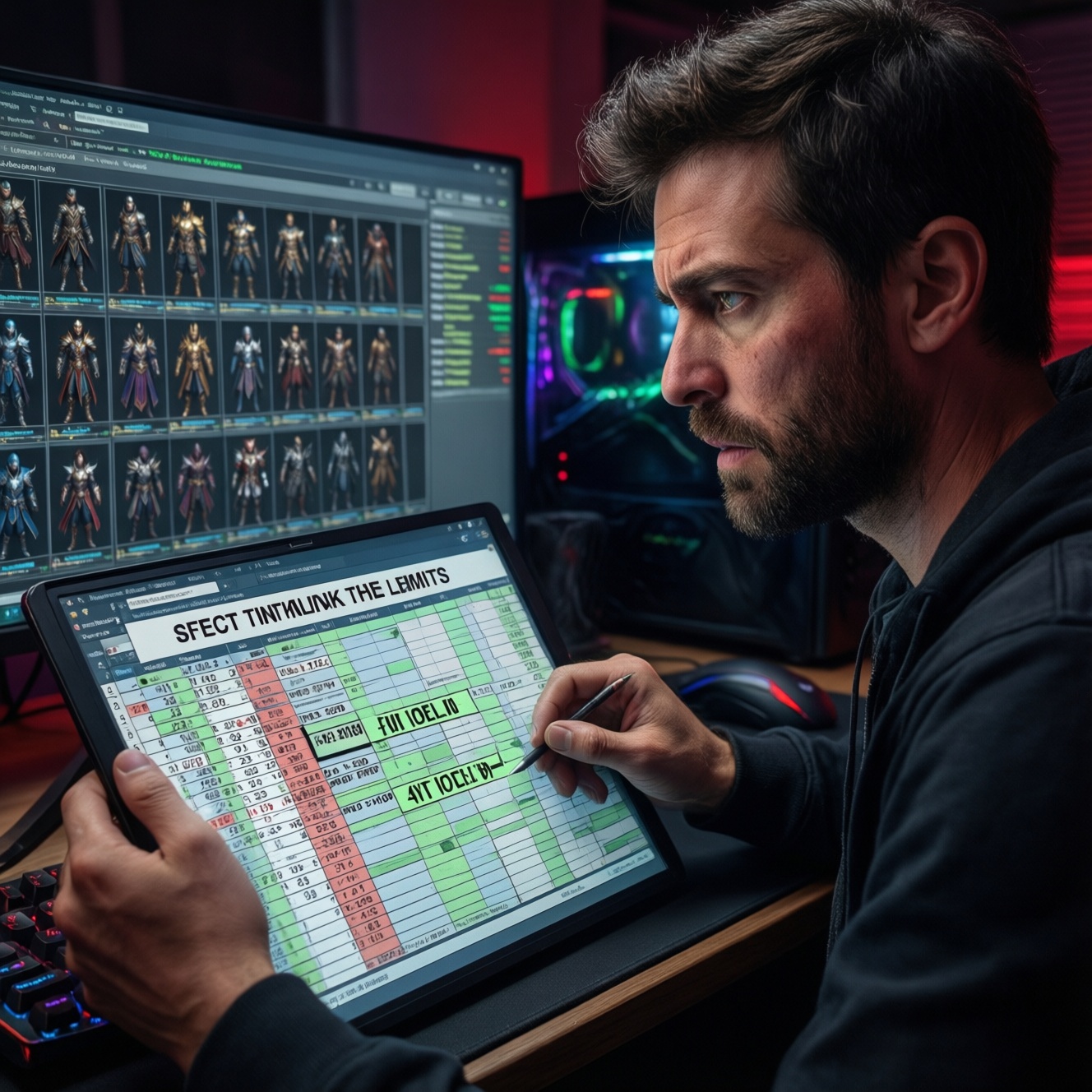
Risk management for skin betting means defining a strict, affordable bankroll, sizing each bet small enough to survive volatility, and using hard rules to prevent tilt-driven decisions. Treat skins as discretionary entertainment value, not income. Track every wager, pre-commit stop limits, and exit when conditions degrade (price swings, liquidity drops, or emotional triggers).
Risk snapshot: immediate rules for your skin bankroll
- Separate a dedicated bankroll from personal funds; if losing it changes your bills, don't start.
- Cap single-bet size; default small until you have stable records and proven edges.
- Assume high variance: reduce sizing when item prices are jumpy or markets are thin.
- Use pre-written stop-loss and time limits to support how to avoid tilt in skin betting during losing streaks.
- Track results by market, item tier, and format; cut formats that are consistently negative.
- Cash out (or pause) when rules are hit-no "one more bet" exceptions.
Setting a sustainable skin-betting bankroll
Who this fits: intermediate users who can follow written rules, accept downtime, and treat skins as entertainment spend. This is practical skin betting bankroll management for people who want fewer blowups and more consistency.
When you should not do this: if you're underage, betting is illegal where you live, you're chasing losses, you borrow to bet, or you can't stop when tilted. If any of these apply, the safest move is not to participate.
- Pick a "loss-safe" bankroll you can lose without impacting obligations. Keep it isolated from rent, debt payments, or savings.
- Define time boundaries (sessions per week, max session length). Limits reduce impulsive re-entry after a bad run.
- Set non-negotiable boundaries: max daily loss, max weekly loss, and a cooldown period after hitting either.
- Choose your primary markets (e.g., coinflip-style, trade-based, case-like formats) and avoid adding new ones mid-week.
| Bankroll setup checkpoint | What "done" looks like | If not done |
|---|---|---|
| Dedicated bankroll isolated | Separate wallet/account; no auto-top-ups | Pause until separation is real |
| Stop rules written | Daily/weekly loss caps + cooldown defined | Default to smallest bet size or no play |
| Session schedule set | Fixed days + max duration per session | Shorten sessions; reduce frequency |
| Legal/age check completed | You meet requirements for your region | Do not participate |
Bet sizing and Kelly adaptations for high-volatility items
This section supports skin betting risk management with sizing tools that respect the reality of volatile item prices and uneven liquidity.
What you need before sizing bets
- Current bankroll value in one base unit (e.g., THB estimate, USD estimate, or a consistent "skin value" unit).
- An edge estimate (even rough): expected win rate or expected value per bet. If you can't estimate it, don't use aggressive sizing.
- A volatility label for the item/market (low/medium/high) based on price swings and liquidity.
- A fixed default stake ("flat bet") for when data is weak or tilt risk is high.
- Rules to reduce sizing when spreads widen, liquidity drops, or you're emotionally activated.
Practical Kelly-style adaptation (safer than full Kelly)
- Start with flat staking until you have enough personal records to evaluate stability. Flat staking beats overconfidence.
- If you insist on Kelly, fractionalize it: use a small fraction (e.g., "quarter-Kelly") and still cap absolute bet size.
- Apply a volatility haircut: reduce stake when items are high tier, thinly traded, or price feeds lag.
- Add a hard maximum stake independent of the formula to survive tail events.
| Approach | When it fits | Main risk | Safe default guardrail |
|---|---|---|---|
| Flat stake | New tracking, uncertain edge | Slow learning if edge exists | Keep stake constant; reduce on tilt signals |
| Capped proportional stake | Moderate confidence, variable bankroll | Over-sizing during hot streaks | Absolute cap + daily loss stop |
| Fractional Kelly (with haircut) | Clear edge + disciplined tracking | Edge estimation error magnifies losses | Use a small fraction + volatility haircut + max stake |
Measuring and managing volatility across markets and item tiers

Use this as your skin betting volatility guide: measure what's actually happening in your markets, then adjust stake and exposure with rules you can follow under stress.
Prep checklist before you change anything
- Pick one base currency/value unit and stick to it for all records.
- Tag every bet with market type and item tier (low/mid/high).
- Decide your default stake and your reduced stake (your "defensive mode").
- Write your pause conditions (liquidity drops, big spreads, emotional triggers).
- Commit to a review schedule (e.g., end of session, end of week).
- Classify markets by how prices are formed (peer-to-peer, house-set, hybrid). Different mechanisms produce different variance, even with the same items.
- Tag items into tiers you can recognize instantly (common/liquid, mid, premium/illiquid). Premium tiers often carry hidden risk: wider spreads and harder exits.
- Track short-term swings with a simple proxy: note whether the item's reference price moved meaningfully since your last session and whether buy/sell quotes widened. If the spread widens, treat volatility as higher.
- Set exposure caps per tier so one illiquid skin doesn't dominate your bankroll. If you can't sell quickly without a discount, it gets a lower cap.
- Adjust stake using a two-mode system: normal mode (default stake) and defensive mode (reduced stake or no play). Switch to defensive mode when spreads widen, outcomes feel "swingy," or you notice tilt cues.
- Reduce correlated risk by avoiding multiple bets tied to the same item or the same thin market in one session. Correlation makes drawdowns sharper than expected.
- Rebalance and cash buffer: keep part of bankroll in a more liquid form so you're not forced to sell an illiquid item at the worst time.
| Volatility signal | What you observe | Immediate action | Re-entry condition |
|---|---|---|---|
| Widening spread | Buy vs. sell quotes separate more than usual | Switch to defensive mode or pause | Spread normalizes for your next review window |
| Thin liquidity | Hard to exit without discount | Lower tier cap; avoid adding exposure | Reliable bids/volume return |
| Price-feed lag | Reference prices update slowly/inconsistently | Do not size up; treat as high volatility | Stable pricing source confirmed |
| Clustered losses | Multiple losses in a short span | Cooldown; reduce stake next session | Post-session review completed |
Tilt triggers: recognition, prevention, and on-the-spot responses
The fastest way to ruin the best strategy for skin betting is tilt: emotional, urgency-driven betting that overrides your sizing and stop rules.
Result-check checklist (use during and after a session)

- I am following my written bet size cap with no exceptions.
- I am not increasing stakes to "get even" after a loss.
- I can explain each bet in one sentence (edge + market + exit plan).
- I have not changed markets/formats mid-session due to boredom or anger.
- I am not refreshing prices compulsively or making "revenge" picks.
- I have taken at least one short break; I am not playing through fatigue.
- I have not used funds outside the dedicated bankroll.
- If I hit a stop limit, I stopped and started the cooldown timer.
On-the-spot responses when tilt is starting
- Pause immediately: close the market view for a fixed cooldown period you set in advance.
- Switch to defensive mode: reduced stake or no play for the rest of the day.
- Do a two-line journal: "What happened" and "What rule I will follow next." Keep it short to prevent bargaining.
| Tilt trigger | Common thought | Rule-based response |
|---|---|---|
| Chasing a loss | "One win fixes it." | End session; cooldown; resume only next scheduled session |
| Hot streak euphoria | "I can press now." | Keep stake unchanged; lock profits by stopping at session end |
| Social provocation | "I'll prove I'm right." | Mute chat; no public challenges; stick to plan |
| Time pressure | "I must act now." | No forced trades; skip if you can't verify pricing/liquidity |
Recordkeeping, metrics to track, and decision thresholds
Good tracking turns "feel" into decisions. Without it, you can't tell whether volatility, market choice, or tilt is driving outcomes-so skin betting bankroll management becomes guesswork.
Sample bankroll spreadsheet layout (minimal but usable)
| Date | Session ID | Market/Format | Item tier | Stake | Result (W/L) | Net change | Notes (tilt? spread? liquidity?) |
|---|---|---|---|---|---|---|---|
| 2026-07-24 | S-001 | Example format | Mid | Base unit | W | +X | Normal mode; spreads stable |
| 2026-07-24 | S-001 | Example format | High | Reduced | L | -Y | Defensive mode; liquidity thin |
Short decision rules (thresholds you can enforce)
- Market cut rule: if a market format shows repeated losses in your own log across multiple sessions, pause it for a full review cycle and stop funding it.
- Tier downgrade rule: if exits require repeated discounting, reduce exposure caps for that tier and prioritize liquidity.
- Defensive switch rule: if you notice any tilt checklist violation, switch to reduced stake or end the session.
- Complexity limit: if you can't price it confidently, you can't size it; skip or use the smallest stake.
Frequent mistakes that break your edge
- Not recording bets immediately, then "reconstructing" later from memory.
- Mixing bankroll and personal funds, making losses feel recoverable.
- Changing stake sizing mid-session without a pre-written rule.
- Ignoring spreads and liquidity, treating all skins as equally tradable.
- Counting unrealized "inventory value" as spendable bankroll when exits are uncertain.
- Adding new formats after losses ("format hopping").
- Tracking only wins/losses, not market type, item tier, and conditions.
- Using "average outcome" thinking and forgetting tail events.
| Metric to track | Why it matters | Decision you'll make from it |
|---|---|---|
| Net change per session | Shows drawdown patterns and recovery realism | Reduce frequency or stake after unstable sessions |
| Results by market/format | Separates skill/edge from noise | Pause or cut the worst format |
| Results by tier | Identifies liquidity/volatility problems | Lower caps on premium/illiquid tiers |
| Tilt flags (yes/no) | Links emotional state to losses | Increase cooldowns; tighten session limits |
Exit strategies, stop-loss rules and staged recovery plans
Exits are part of your skin betting risk management system: they prevent one bad period from turning into an account wipe and keep your decision quality intact.
Alternatives you can choose (pick one primary path)
- Hard stop + cooldown: end the session when your daily loss cap is hit. Best when you're prone to tilt or you play fast formats.
- Staged step-down recovery: after a losing day, reduce stake for the next scheduled session(s) and rebuild only after clean execution (no tilt flags). Best when volatility is high and you still want controlled exposure.
- Market rotation freeze: lock your allowed formats for a week; no adding "new opportunities" after losses. Best when format hopping is your main leak.
- Cash-buffer exit: periodically convert a portion to a more liquid form to avoid forced sales. Best when you hold higher-tier items with uncertain exit pricing.
Simple stop rules you can actually follow
- Loss stop: if you hit your pre-set daily loss, stop immediately and start the cooldown.
- Time stop: end the session at the scheduled time even if you are up, to reduce "pressing."
- Rule-violation stop: one clear tilt violation triggers a stop, not a debate.
| Situation | Best exit option | What you do next session |
|---|---|---|
| Rapid swings, uncertain pricing | Hard stop + cooldown | Defensive mode or pause until conditions stabilize |
| Repeated small losses over sessions | Staged step-down recovery | Reduced stake; review logs before scaling back |
| Constantly switching formats | Market rotation freeze | Only pre-approved formats; no exceptions |
| Inventory feels "stuck" | Cash-buffer exit | Lower tier exposure caps; prioritize liquidity |
Practical clarifications and fast-response scenarios
What is the single safest default bet-sizing rule?
Use a flat, small stake with a hard maximum cap and a daily loss stop. Increase only after your log shows stable execution and you can explain your edge without guessing.
How do I know if an item is too volatile for my bankroll?
If you can't exit near the reference price without discounting, treat it as high volatility. High volatility means lower exposure caps and smaller stakes, or skipping it entirely.
Is Kelly the best strategy for skin betting?
Full Kelly is fragile because your edge estimate can be wrong. If you use Kelly at all, use a small fraction plus an absolute stake cap and a volatility haircut.
What should I do immediately after hitting my stop-loss?
End the session and start your cooldown timer. Don't switch formats, don't chase, and only review your log after the cooldown.
How can I reduce the chance of tilt during a winning streak?
Keep stake unchanged and end on the scheduled time stop. Winning streak tilt often shows up as "pressing," so rules must protect you from increasing exposure.
How do I handle "inventory value" when tracking my bankroll?
Separate liquid bankroll from illiquid inventory and assume you may need to sell at a discount. Don't size new bets as if all inventory is instantly cashable.
What's the fastest way to test whether my losses are tilt-related?
Add a simple tilt flag (yes/no) to every session and write one sentence about your state. If losses cluster around "yes," your primary fix is behavioral, not mathematical.