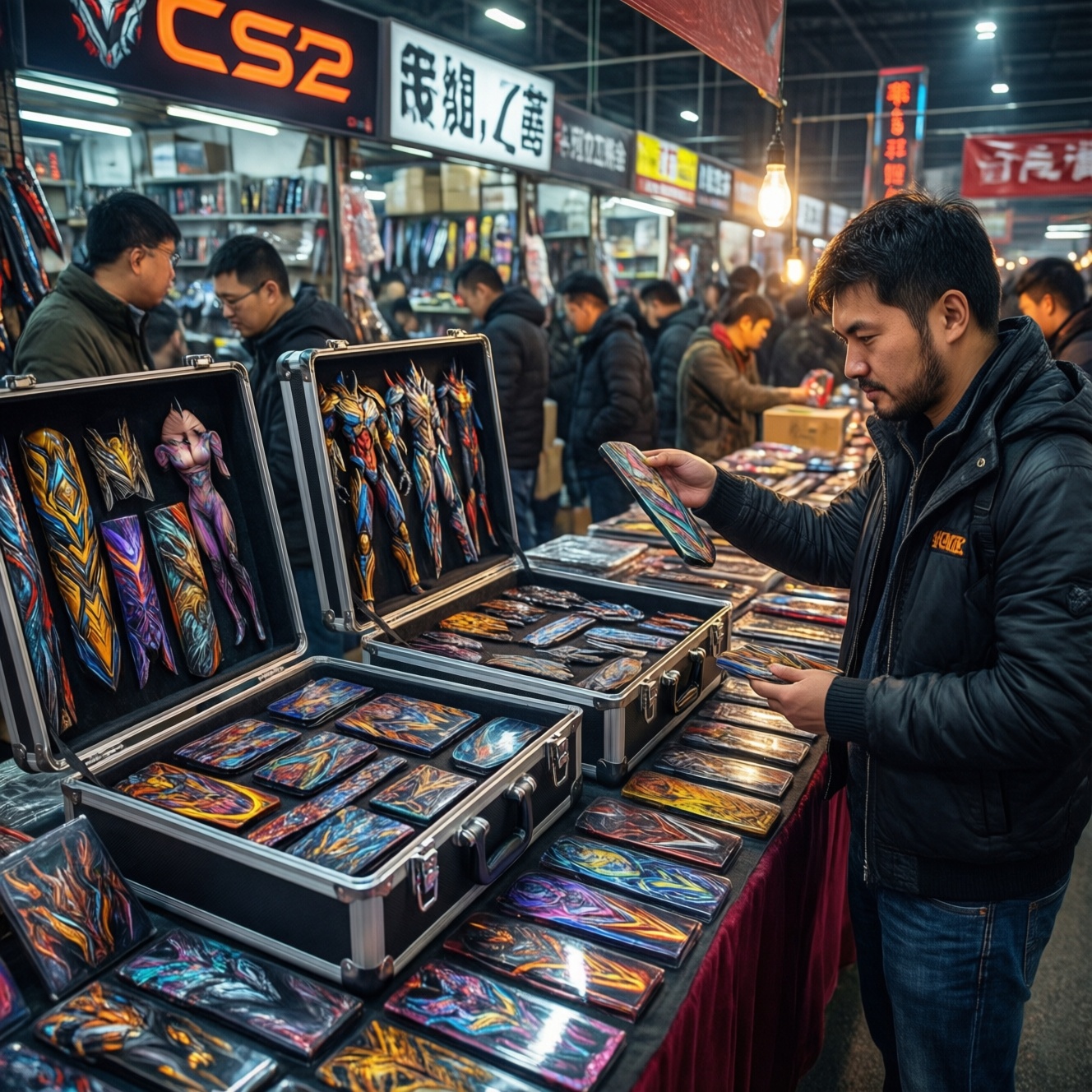


CS2 skin price spikes before Majors and big updates are mostly driven by short-term demand shocks (new buyers, hype, liquidity crunch) and sudden changes in expected future supply (cases, drops, crafts, sticker relevance). If you track spreads, volume, and listing depth-not just headline cs2 skin market prices-you can act earlier and avoid buying the top.
Market dynamics at a glance
- If a Major gets close and listings thin out, then even small buy pressure can move prices fast.
- If an update changes how an item is obtained or perceived, then the market reprices future scarcity within hours to days.
- If player-led demand rises (playable, visible items), then spikes are usually steadier than purely speculative runs.
- If speculators dominate volume, then pumps unwind quickly and spreads widen.
- If you rely on a cs2 skins price tracker alone, then you may miss liquidity signals (depth, fees, withdrawal risk).
- If you plan to buy cs2 skins for an event window, then your exit plan matters more than the entry screenshot.
How Majors Trigger Short-Term Price Surges
Metric: listing depth drops while buy pressure concentrates on a narrow set of "Major-relevant" cosmetics. Implication: prices can spike without any fundamental change in utility-just fewer sellers willing to list before the event.
Definition (boundaries): a "pre-Major spike" is the temporary repricing that happens when market participants expect heightened attention and trading activity around the Major cycle (viewership, stickers, content). It is not the same as a long-term appreciation trend; it is typically a liquidity event with a narrative attached.
If..., then... framing: if you see rising activity but stable supply, then you're likely in a demand-led move; if you see stable activity but rapidly shrinking listings, then you're likely in a supply squeeze where late entries pay the highest premium.
| Market signal | Pre-Major run-up (typical behavior) | Post-update repricing (typical behavior) | If you observe this, then... |
|---|---|---|---|
| Listing depth on top pages | Thins as holders "wait for hype" | Shifts to new equilibrium (some items vanish, others flood) | If depth collapses quickly, then size down entries or stagger buys. |
| Bid-ask spread | Widens during fast candles | Widens first, then normalizes after clarity | If spreads widen, then avoid market buys; place patient limit bids. |
| Volume quality | More small lots, frequent flips | One-off repricing trades, then fewer prints | If volume is mostly micro-flips, then treat the move as fragile. |
| Substitution effect | Cheap lookalikes get dragged up | Only "beneficiaries" move; substitutes can lag | If substitutes rise with no reason, then plan quicker exits. |
Rarity, Float, and Pattern: Valve's Pricing Signals
Metric: the market assigns premiums to scarcity proxies (rarity tier, float distribution, pattern desirability) because they constrain replaceability. Implication: when hype hits, the least replaceable variants reprice first and hold value better during pullbacks.
- If an item sits in a rarer drop/case context (harder to replace), then it usually reacts earlier to event-driven demand.
- If the float is near a "cutoff" that collectors target (very clean or very worn), then small demand shifts can cause outsized price moves due to thin supply at that exact float band.
- If a pattern is widely recognized as desirable (clear visuals, iconic placements), then pricing becomes more narrative-driven and less anchored to average market comps.
- If the item is highly "inspectable" and status-signaling (finishes that read well in-game), then player demand supports the floor better than obscure skins.
- If a skin has many near-substitutes, then pre-Major pumps tend to spread out and fade faster as buyers rotate to cheaper alternatives.
- If supply can be refreshed easily (highly opened case, heavy farming), then spikes are more likely to be liquidity spikes than durable repricings.
Player Demand vs. Speculator Activity: Measuring Impact
Metric: who is the marginal buyer-players upgrading loadouts or traders seeking a flip. Implication: the "stickiness" of new demand determines whether a spike turns into a new range or snaps back.
- Sticker-season shopping: if players want themed inventories for viewing/streaming season, then popular mid-tier skins often rise steadily; if traders front-run this, then the last leg is usually the weakest.
- Content-creator spotlight: if a skin gets featured repeatedly, then demand can look organic but still be reflexive; treat it as trend-following unless listing depth also grows.
- Loadout refresh after gameplay meta talk: if a weapon becomes "fun again" socially, then skins tied to that weapon can get real player bids.
- Portfolio rotation: if you notice many correlated items moving together, then it's likely speculator baskets, not individual fundamentals.
- Platform-arbitrage chasing: if the same item is simultaneously "cheap" on one cs2 skin trading site and "expensive" on another, then short-term volume can be dominated by cross-market movers rather than players.
Update-Driven Valuation Shifts: Case Studies
Metric: changes in expected future supply and in perceived "future desirability" after patch notes, UI/lighting changes, or economy adjustments. Implication: updates can create permanent repricing, but only after the market agrees on the new baseline.
- If an update increases supply access (easier to obtain, more openings, more substitutes), then treat early rebounds as dead-cat bounces until spreads tighten and listings stabilize.
- If an update reduces supply access (harder to obtain, removed pathway, reduced drops), then expect fast repricing first and "catch-up buying" later, especially for cleaner floats and notable patterns.
- If an update changes visuals (finish looks better/worse), then monitor which specific finishes gain attention; the average skin in the same rarity tier may not follow.
- If an update changes player behavior (more playtime, more trading, different weapon usage), then prioritize liquid, widely used weapon skins over niche collectibles for shorter holds.
- Limitation: if patch interpretation is unclear, then the first move is often positioning, not information-expect whipsaws.
- Limitation: if you cannot withdraw or sell quickly on your chosen marketplace, then "the right idea" can still lose to execution friction.
- Limitation: if you anchor to old comps, then you will misprice the new regime; treat the first post-update week as price discovery.
Liquidity, Listing Behavior, and Exchange Mechanics

Metric: time-to-exit at your target size without pushing the market. Implication: most losses around event spikes come from illiquidity, fees, and slow execution-more than from "being wrong" on direction.
- If you only check the last sale print, then you can overpay; check spread and depth to see what you can actually buy or sell without slippage.
- If a marketplace shows "high volume" but listings are thin at the current range, then it may be wash-like flipping behavior; treat the move as less trustworthy.
- If you plan to buy cs2 skins into hype, then predefine your exit venue (same market vs cross-market) because fees and transfer delays decide net outcome.
- If you ignore currency/fee differences across a cs2 skin trading site, then apparent arbitrage can be negative after costs.
- If you accumulate too many low-liquidity variants (odd floats/patterns), then you may be right on cs2 skin market prices but still unable to realize gains.
Predictive Indicators and Risk Management for Traders
Metric:Implication: you should trade what you can exit, not what looks best on charts.
Mini-case (rule-based): If you want to identify a pre-Major squeeze candidate, then require multiple confirmations instead of a single green candle.
IF (Major_window_is_close)
  AND (listing_depth_is_falling for 3+ checks)
  AND (spread_is_not_exploding)
  AND (item_has_real_player_demand: popular weapon + readable finish)
THEN
  enter_in_tranches (e.g., 3 smaller buys)
  set_exit_levels BEFORE buying (partial take-profit + time-stop)
ELSE
  wait; watchlist only
Action checklist (self-audit before you trade)
- If your plan depends on a single cs2 skins price tracker chart, then add depth + spread checks before entering.
- If you can't name your exit marketplace and fees, then don't buy cs2 skins for a time-bound catalyst.
- If you're hunting the best cs2 skins to invest in, then prioritize liquidity first, rarity/float second, and narrative last.
- If spreads widen while you're entering, then slow down and switch to tranches or limit bids.
- If your thesis is "Major hype," then set a time-based exit; don't convert a trade into a long hold by accident.
Practical answers to recurring market issues
When should I buy cs2 skins ahead of a Major?
If listing depth is already collapsing and spreads are widening, then you're late; wait for pullbacks or buy in small tranches. If depth is thinning but spreads are still reasonable, then risk is easier to control.
Why do cs2 skin market prices sometimes rise with no news?
If sellers delist into expected hype, then supply drops and prices lift without any patch note. If speculators coordinate into the same items, then correlation spikes can look like "no-news rallies."
How do I find the best cs2 skins to invest in for intermediate budgets?
If your budget is moderate, then prioritize liquid, widely-used weapon skins with common-to-mid rarity and strong in-game readability. If you buy ultra-niche patterns, then your exit will be slower and more price-sensitive.
Is a cs2 skins price tracker enough for timing entries?
If you only watch last traded price, then you miss slippage risk; add spread and listing depth checks. If the tracker also shows volume and order-book proxies, then it's more usable for timing.
Which cs2 skin trading site is best for event-driven trades?
If you need fast exits, then choose the venue with the tightest spreads and the most reliable cashout/transfer flow for your region (th). If withdrawals are slow or uncertain, then avoid short-term catalyst trades there.
What's the biggest mistake during big updates?
If you assume the first post-update price is "fair value," then you'll trade noise; wait for a new range to form. If you can't explain whether supply or desirability changed, then don't force a trade.