


For Thailand-based players, skin betting and crypto prizes create two parallel risks: (1) legal exposure from using unlicensed gambling/skin betting sites and (2) tax exposure when winnings become a measurable economic benefit in THB. Treat every win, swap, or sale as potentially reportable, keep defensible valuations, and escalate to a Thai tax professional when amounts or patterns stop being "incidental."
Core tax and legal takeaways for crypto and skin-betting winnings
- Assume tax relevance once value is realized (sold, swapped, cashed out, or used to buy something), even if the platform calls it "in-game."
- "Crypto gambling tax" risk is mostly documentation risk: missing timestamps, wallet links, and price sources is what turns a manageable case into an audit problem.
- Skins behave like property for practical tracking: acquisition cost (often zero if "won"), disposal proceeds, and gains/losses on sale or swap.
- Using skin betting sites or crypto betting sites can be a legal red flag if the operator is unlicensed or targets users where it is restricted.
- Valuation must be reproducible: pick a market source and a method, then apply it consistently.
- Separate "platform balance" from "your asset": custodial balances add counterparty and freeze risk; self-custody increases traceability needs.
How jurisdictions treat skin betting, loot boxes and crypto prizes
This guidance fits intermediate users who already move value between games/marketplaces/wallets and need a defensible way to decide what to track and when to ask for professional help. It is not suitable if you are operating, promoting, or providing payment rails for skin betting sites or crypto betting sites, or if you are trying to conceal flows-those scenarios require jurisdiction-specific legal advice before you proceed.
| Jurisdiction (high-level) | How skins/loot boxes are typically viewed | How crypto prizes/winnings are commonly treated for tax | Primary compliance pain point |
|---|---|---|---|
| Thailand (TH) | Skin betting may be treated as gambling-related activity; operator licensing and local restrictions matter. | Tax exposure often arises when value is realized into THB or exchanged; documentation is critical to support cost basis and proceeds. | Unclear boundaries between "game item" and monetizable asset; evidence quality in audits. |
| United Kingdom (UK) | Regulators focus on whether items are monetizable and used for gambling-like mechanics; age protection and consumer harm are emphasized. | Tax treatment depends on facts; gambling winnings can be non-taxable for individuals, but trading-like activity may change the analysis. | Whether activity looks like gambling vs. trading/business; AML/KYC around cash-out. |
| United States (US) | Skin markets raise gambling/consumer issues; enforcement depends on state/federal angles. | Crypto events are frequently taxable on sale/exchange; winnings can be taxable income with basis tracking thereafter. | Granular transaction reporting and matching wallets/exchanges to gains. |
| European Union (EU, general) | Country-by-country differences; loot boxes and skin betting may face consumer/gambling scrutiny. | Many regimes tax realized gains; some require detailed reporting for crypto disposals and foreign platforms. | Cross-border reporting and varying definitions of taxable disposals. |
| Singapore (SG) | Focus on licensing and payment regulations where gambling characteristics exist. | Tax often depends on whether it is capital vs. business income; frequency and intent matter. | Classifying activity (personal vs. business-like trading) and audit trail quality. |
Practical takeaway: "crypto betting legal" is not a single yes/no answer-legality depends on operator licensing, targeting, and local gambling rules. For a player, the safest assumption is: if you can convert it to money, regulators can treat it as a financial benefit worth examining.
When winnings become taxable: identifying reportable events
To assess your "tax on crypto gambling winnings" exposure, you need to identify moments where value is created or realized and where it can be measured in THB (or another functional currency). Prepare these tools and accesses before you reconstruct your history:
- Access to game/marketplace histories: trade logs, drop histories, inventory changes, and market sales exports (CSV if available).
- Access to all wallets and exchange accounts: deposit/withdrawal histories, trade histories, and address lists.
- A consistent pricing source: a chosen exchange's spot price, an index price, or a market snapshot method for each timestamp you record.
- A tracking workbook or ledger tool: spreadsheet with formulas or a crypto accounting app that supports custom assets (for skins) and cost basis methods.
- Identity and verification artifacts: screenshots of KYC status, account emails, and platform terms for the period (useful when a platform later disappears).
Common reportable-event triggers you should track as separate line items:
- Winning a skin or token (income-like event in many analyses, especially if immediately sellable).
- Selling a skin for fiat or crypto (disposal; proceeds are measurable).
- Swapping crypto for another crypto (disposal of the first asset; creates a valuation point).
- Using crypto to buy skins or services (crypto disposal plus acquisition of a new asset).
- Withdrawing to a bank or e-wallet (strong "realization" evidence and matching point for auditors).
Practical methods to value skins and crypto for tax purposes
Risk-aware limits before you start:
- Do not "backfill" with invented prices; if a timestamp is missing, use a documented approximation method (and mark it as an estimate).
- Do not mix pricing sources arbitrarily; inconsistency is a common audit challenge in crypto gambling tax cases.
- Do not rely on a platform's internal balance alone; record the external transaction (wallet txid, exchange order id, market sale id).
- Do not ignore small swaps; frequent micro-transactions can add up and are easy to misstate.
- Define your "unit of account" and a single price source. Use THB as the reporting lens if you are Thailand-based, and choose a consistent pricing reference for each crypto asset at the recorded time. For skins, choose a primary marketplace price source and stick to it.
- Document the source name and the exact rule (e.g., "spot price at the timestamp" or "daily close price").
- Classify each event into one of four buckets. For every line item, tag it as: acquisition (win/buy), disposal (sell/swap/spend), transfer (wallet move), or fee/commission. This prevents double-counting.
- Transfers should not create gains by themselves, but they are crucial for chain-of-custody evidence.
- Value skins at a defensible market price at the time of the event. If you sell a skin, use the actual sale proceeds (net of fees) as primary evidence. If you win or receive a skin, use a contemporaneous listing/market snapshot method you can reproduce later.
- Keep screenshots or exported sales pages showing the item, float/condition, and time.
- Value crypto disposals using transaction-time pricing. For a swap (e.g., token A to token B), record the fair value of token A disposed and treat token B as acquired at that same value (plus/minus fees).
- Store the exchange order id or on-chain tx hash to anchor the timestamp.
- Choose and apply one cost-basis method consistently. Maintain per-asset lots (date, quantity, cost) so you can compute gains on each disposal using your chosen method. If your jurisdiction requires a specific method, follow that; otherwise, pick one and do not switch mid-year without a clear rationale.
- Write journal-style entries for audit clarity. Use a simple "debit/credit" narrative even if you are not doing full accounting; it makes your file reviewable.
- Example (skin sold for USDT): "Dispose: Skin X; Proceeds: 120 USDT; Fees: 3 USDT; Net proceeds: 117 USDT; Acquire: 117 USDT at THB value on timestamp."
- Example (crypto spent to buy skin): "Dispose: 0.01 BTC at timestamp THB price; Acquire: Skin Y at same THB value; Fees: network fee."
Recordkeeping, documentation templates and audit readiness
- One row per event with: timestamp, platform, asset, quantity, event type, proceeds/value in THB, fees, and reference id (tx hash/order id/sale id).
- Wallet map: a list of addresses you control, labeled by purpose (trading, cold storage, payouts).
- Platform evidence pack: PDFs/screenshots of account profiles, KYC status, and terms (especially for skin betting sites that may later go offline).
- Pricing evidence: export or screenshot showing the price used at the relevant time (crypto) and market snapshot (skins).
- Fee evidence: network fees, exchange trading fees, marketplace commissions captured per event.
- Reconciliation: end-of-period balances per wallet/exchange should tie to your ledger after accounting for transfers and fees.
- Separation of personal vs. high-frequency activity: notes explaining intent and pattern if your behavior resembles trading or a side business.
- Readable narrative (one page): what platforms you used (including crypto betting sites), what assets, and how you valued items.
Regulatory risks: licensing, AML/KYC obligations and enforcement trends
- Assuming in-game means unregulated even when items are freely transferable and cash-out is straightforward.
- Using unlicensed operators that target users in restricted markets; this is the core "crypto betting legal" failure mode.
- Layering through multiple accounts/wallets without a documented reason, which can resemble concealment.
- Ignoring KYC flags: frequent deposits/withdrawals, rapid turnover, or high-volume marketplace sales can trigger account freezes.
- Relying on "off-platform" pricing claims without preserving evidence at the time of valuation.
- Not tracking swaps because no fiat was involved; many regimes treat crypto-to-crypto as a taxable disposal.
- Understating fee impact (market commissions, gas, spreads), leading to incorrect gains calculations.
- Promoting or facilitating access (referrals, running a group, managing others' funds) which can shift you from "player" to "operator-like" risk.
Compliance tactics: minimizing exposure while staying within the law
- Use licensed, KYC-compliant venues where possible (when available) and avoid gray-market skin betting sites; this reduces freeze risk and improves your evidence trail.
- Consolidate flows by limiting the number of wallets/exchanges you use; fewer hops means easier reconciliation and a cleaner "tax on crypto gambling winnings" file.
- Prefer cash-out discipline over constant swapping: fewer disposals generally mean fewer valuation points to defend (especially relevant for crypto gambling tax recordkeeping).
- Escalate early when patterns change: if activity becomes frequent, systematic, or involves third parties, consult a Thai tax advisor and (if needed) a lawyer before continuing-this is the safest alternative to "DIY" compliance for complex cases.
Typical compliance uncertainties and concise expert clarifications
Are winnings from skin betting automatically taxable in Thailand?
They can be, once the benefit is measurable and realized (sold, swapped, cashed out, or used to buy something). The safest approach is to track each realization event with a THB value and supporting evidence.
How do I handle "tax on crypto gambling winnings" if I never withdraw to my bank?
Bank withdrawal is not the only trigger; selling or swapping crypto can create a valuation point. Record each disposal and the price used at the time.
Do crypto-to-crypto swaps on crypto betting sites matter for tax?
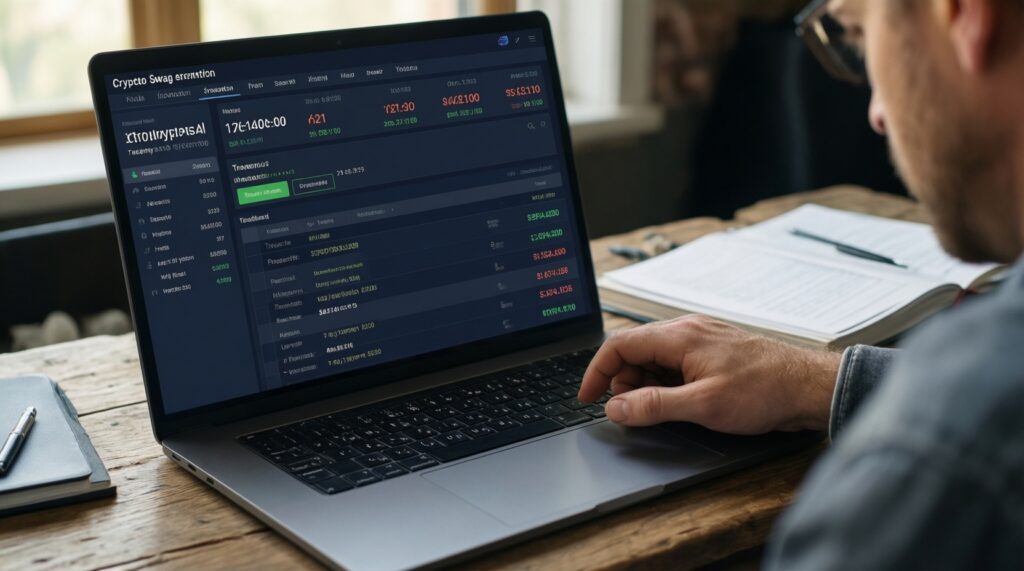
Often yes, because swaps are typically treated as disposals of the asset you give up. Keep the order id/tx hash, timestamp, and price reference for each swap.
What's the most defensible way to value a skin I won?
Use a contemporaneous market snapshot from a consistent source and preserve evidence (export/screenshot) showing item specifics and time. If you later sell it, the actual sale proceeds become your strongest valuation evidence.
Is "crypto betting legal" if the website is offshore?
Offshore hosting does not decide legality; licensing and local gambling rules do. If you cannot verify licensing and lawful targeting for your location, treat it as high-risk.
Can I ignore small wins and micro-transactions?
Ignoring them is risky if you have many events; small amounts can accumulate and mismatches are easy to detect when you cash out. Use a ledger approach that can scale, even if you later summarize totals for reporting.
What records should I keep if a skin betting site disappears?
Keep exports and screenshots of your history, plus any emails, KYC confirmations, and transaction references. Store them offline so you can still substantiate valuations and ownership later.