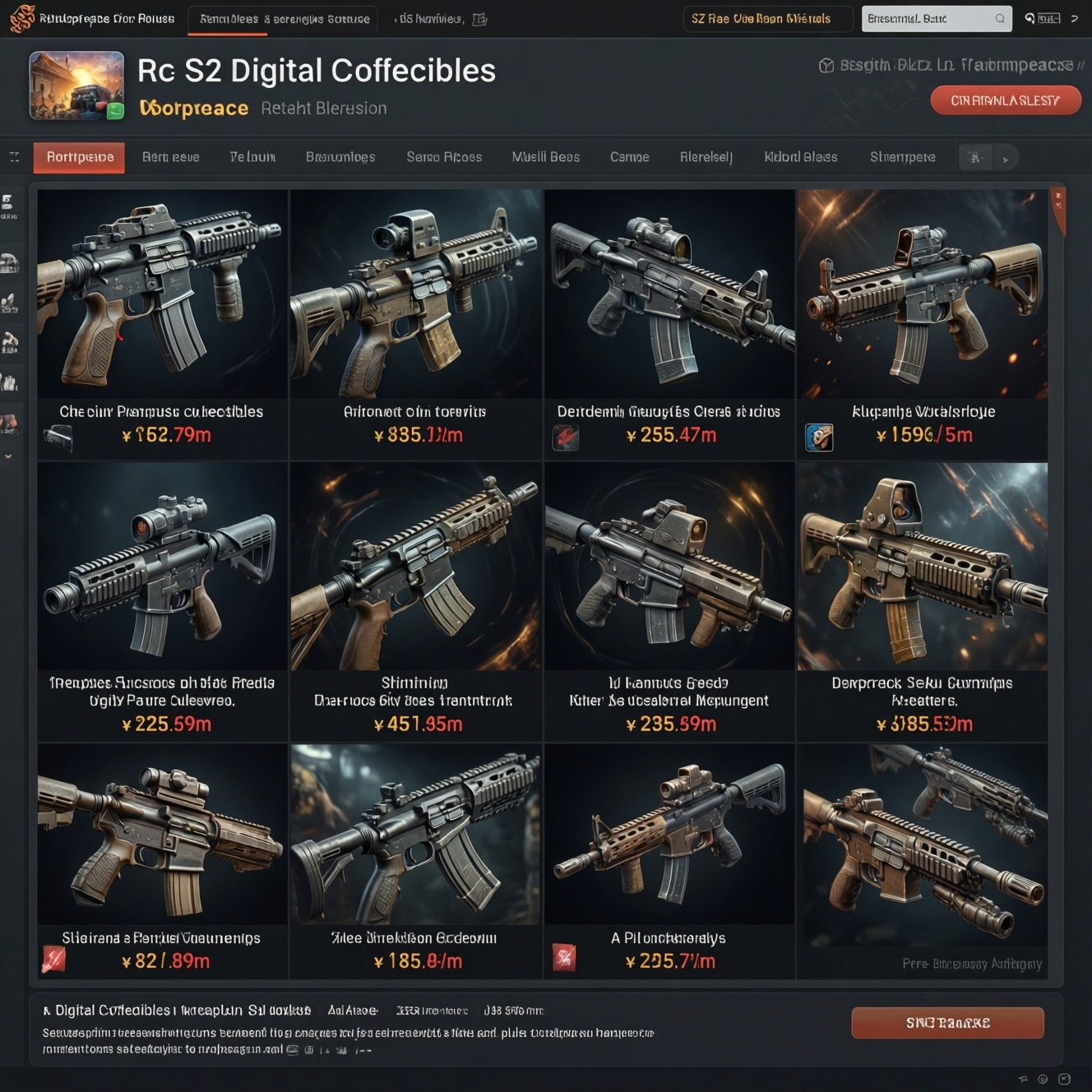

Long-term value is more likely to persist where supply is controlled, demand is durable, and exit liquidity is reliable. In practice, Steam skins tend to behave like platform-tied collectibles with consistent trading venues, while NFTs are stronger on verifiable provenance but weaker on coordination, policy uncertainty, and fragmented markets. Choose based on your primary goal: invest, play, or collect.
Core Value Drivers at a Glance
- Supply control: predictable issuance beats "infinite" reprints and poorly communicated drops.
- Liquidity path: the easier it is to sell without major friction, the more "value" behaves like value.
- Demand durability: items anchored to long-lived games/communities usually outlast hype cycles.
- Ownership realism: blockchain provenance is strong; practical control still depends on access, custody, and marketplaces.
- Platform/regulatory risk: policy changes (bans, delists) can reprice assets overnight.
- Utility: cosmetic/in-game status can sustain demand better than purely speculative narratives.
Economic Fundamentals: Scarcity, Inflation and Supply Control
Use these criteria to evaluate NFT vs Steam skins value beyond slogans. Score each item you're considering (high/medium/low) and only proceed when most boxes are "high."
- Hard supply cap clarity: is total supply fixed and auditable, or can it be changed via "new season," "new contract," or re-mints?
- Issuer credibility: is the creator/operator known for consistent policy, or for surprise dilution?
- Demand source quality: is demand driven by gameplay/status (stickier) or airdrop expectations (fragile)?
- Substitutability: how easily can a near-identical alternative satisfy the same buyer? Lower substitutability supports pricing.
- Price discovery maturity: is there a deep history of trades and stable spreads, or only sporadic "floor" prints?
- Holding costs and friction: custody complexity, marketplace fees, withdrawal limits, and time-to-cash affect realized returns.
- Concentration risk: if a few wallets/accounts control supply, prices can be more easily pushed/pulled.
- External correlation: NFTs often move with broader crypto sentiment; Steam skins often move with game cycles and platform policy.
Provenance and Ownership: Blockchain Ledgers vs. Platform Account Records
For NFT items investment the "provenance layer" is usually stronger; for a Steam skins investment the "market plumbing" is often simpler. The choice is less about ideology and more about where you want your main risk: on-chain coordination vs. platform dependency.
| Option | Who it suits | Pros | Cons | When to choose |
|---|---|---|---|---|
| Steam skins (popular evergreen titles) | Traders who want repeatable comps and frequent market activity | Single dominant venue behavior; recognizable rarity tiers; simpler user flow when you buy Steam skins marketplace | Platform rules dominate; inventory and trading constraints can change; cashing out may require off-platform steps | When your edge is monitoring game updates, drops, and long-running demand |
| Steam skins (ultra-rare legacy / discontinued) | Collectors and patient holders | Scarcity narrative is easier to understand; cultural recognition inside the game community | Thin liquidity; price can be "set" by a few holders; authenticity is platform-defined | When you can hold through long periods and accept slow exits |
| NFTs (blue-chip collections with strong community) | Collectors who value on-chain history and social signaling | On-chain provenance; broader marketplace choice; easier to verify transfer history | Fragmented liquidity; higher exposure to sentiment shifts; smart-contract/marketplace risk | When brand/community is the primary demand engine and you can handle volatility |
| NFTs (game NFTs tied to a live service) | Players who also speculate on the game's growth | Potential in-game utility; tradability outside a single platform in principle | Utility often changes; game success is a single-point dependency; interoperability is frequently overstated | When you actively play and can react quickly to balance/policy changes |
| NFTs (one-of-ones / art pieces) | Niche collectors with a specific taste and network | True uniqueness; provenance matters most here | Very thin markets; valuations are subjective; exits rely on relationships | When you have buyer access and accept long time-to-sell |
| Hybrid exposure (small basket of both) | Intermediate buyers reducing single-system risk | Diversifies platform vs. on-chain risk; lets you learn market microstructure | More monitoring overhead; easy to overtrade and leak fees | When your goal is learning + controlled risk rather than maximum upside |
Liquidity and Marketplaces: How Easily Items Convert to Cash
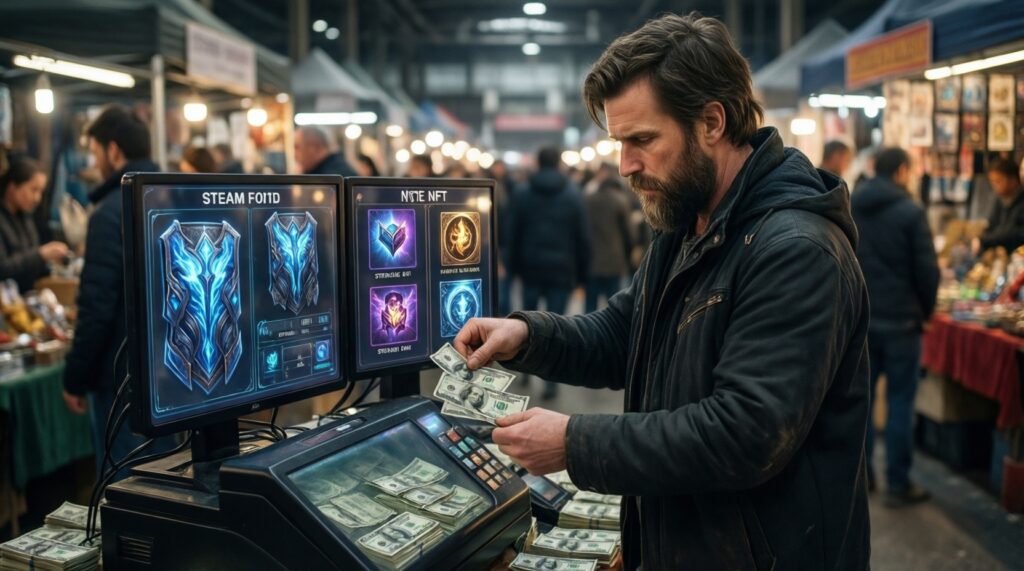
Liquidity is where "paper value" becomes real value. Use these scenario rules to decide quickly:
- If you need predictable exits and frequent bids, then prioritize Steam skins with steady transaction flow over niche NFTs, even if NFT provenance is cleaner.
- If you can only profit by finding the next narrative early, then NFTs may fit better-but treat it as trading, not passive holding, and define your sell triggers upfront.
- If your plan requires converting to cash fast, then avoid items where the main path is "find a private buyer," whether that's a rare Steam item or a 1/1 NFT.
- If you're choosing between two similarly priced items, then pick the one with (a) tighter spreads, (b) more recent comparable sales, and (c) fewer transfer/withdrawal steps.
- If you're tempted by "cheap floors," then check whether listings are real liquidity or just many sellers and no buyers.
Practical note: "Where you sell" matters as much as "what you hold." For Steam, understand exactly how you will buy Steam skins marketplace and later exit; for NFTs, confirm which marketplaces and chains actually have consistent buyers for that collection.
Utility and Interoperability: In-Game Functionality and Cross-Platform Use
Use this fast selection algorithm to avoid overpaying for promised utility that doesn't survive contact with reality.
- Write your primary goal as one word: invest, play, or collect.
- If your goal is play, shortlist only items you will actively use in-game within the next month.
- If your goal is invest, require evidence of repeat sales (not just listings) and clear supply limits before buying.
- For NFTs, verify whether "utility" is live today (already integrated) versus "roadmap utility" (promises).
- For Steam skins, verify whether the item's desirability depends on a specific meta, case/drop cycle, or esports moment that can fade.
- Ignore "cross-game interoperability" claims unless you can name the exact game(s) where the item works now and how users obtain it there.
- Only after the above, compare price versus the closest substitutes (same rarity tier / similar aesthetics / similar status value).
Regulatory and Platform Risk: Bans, Delists and Policy Volatility
Most losses come from avoidable process mistakes, not from picking the "wrong" asset class. Watch for these pitfalls:
- Assuming an NFT guarantees control; losing wallet access or signing malicious approvals can erase practical ownership.
- Ignoring chain/marketplace dependency (collection liquidity may live on one venue; if it delists, exits worsen).
- Buying Steam skins without understanding trading restrictions, lock periods, or account limitations that delay exits.
- Overweighting "official" rarity labels while ignoring actual buyer preference (the market pays for what people want, not what a UI says).
- Confusing listed floor price with executable sell price; illiquid items can gap down on the first real sale.
- Not modeling policy shocks: platform rule changes, game updates, contract upgrades, or IP enforcement can reprice assets quickly.
- Going all-in on one collection/item because it feels "safe," instead of sizing positions to match exit liquidity.
- Chasing "best NFT items to buy" lists without checking whether your size can be exited without moving the market.
Speculation, Community Momentum and Cultural Rarity
Decision-tree summary: if your priority is repeatable trading and consistent market structure, Steam skins are often the better fit; if your priority is verifiable provenance and collecting across open ecosystems, NFTs can fit better. Neither is universally superior: your best choice depends on liquidity needs, your time horizon, and whether demand is gameplay-native or hype-driven.
- If your main goal is invest: start with the option that has the clearest exits and the least "policy surprise" for you personally; compare NFT vs Steam skins value by how reliably you can sell, not by peak screenshots.
- If your main goal is play: choose the ecosystem where you already spend time; utility you use beats theoretical upside.
- If your main goal is collect: choose the community you want to be part of for years; provenance (NFTs) or in-game cultural status (Steam) becomes the lasting driver.
Practical Buyer Questions and Short Answers
Is this mainly an investment question or a hobby purchase?
If it's investment-first, prioritize exit liquidity and policy risk over aesthetics. If it's hobby-first, buy what you will use or proudly display, and treat resale as optional.
What is the single biggest difference in ownership between NFTs and Steam skins?
NFTs provide on-chain provenance and transfers, while Steam skins are controlled by the platform's account and rules. In both cases, practical ownership depends on access and compliance with the system you're using.
How do I evaluate liquidity before buying?
Look for recent executed sales and how quickly comparable items clear at nearby prices. Avoid markets with many listings but few completed trades.
Are Steam skins good for long-term holding?
They can be, especially in long-lived titles with stable demand and recognizable scarcity. The trade-off is platform dependency and possible rule changes.
How risky is NFT items investment compared to skins?
It's often more exposed to sentiment swings and fragmented marketplaces, but can have stronger provenance. Risk is highly collection-specific; treat each project as its own market.
What are the "best NFT items to buy" for someone intermediate?
The "best" is usually what has durable community demand, verifiable supply constraints, and consistent sales history. Avoid roadmap-only utility and thinly traded collections unless you have a clear exit plan.
What's the safest way to start if I want to buy Steam skins marketplace items?
Start small in highly liquid items, document your full exit route before buying, and avoid concentrating in one rare piece. Make sure you understand any trade locks or transfer limits that affect timing.