

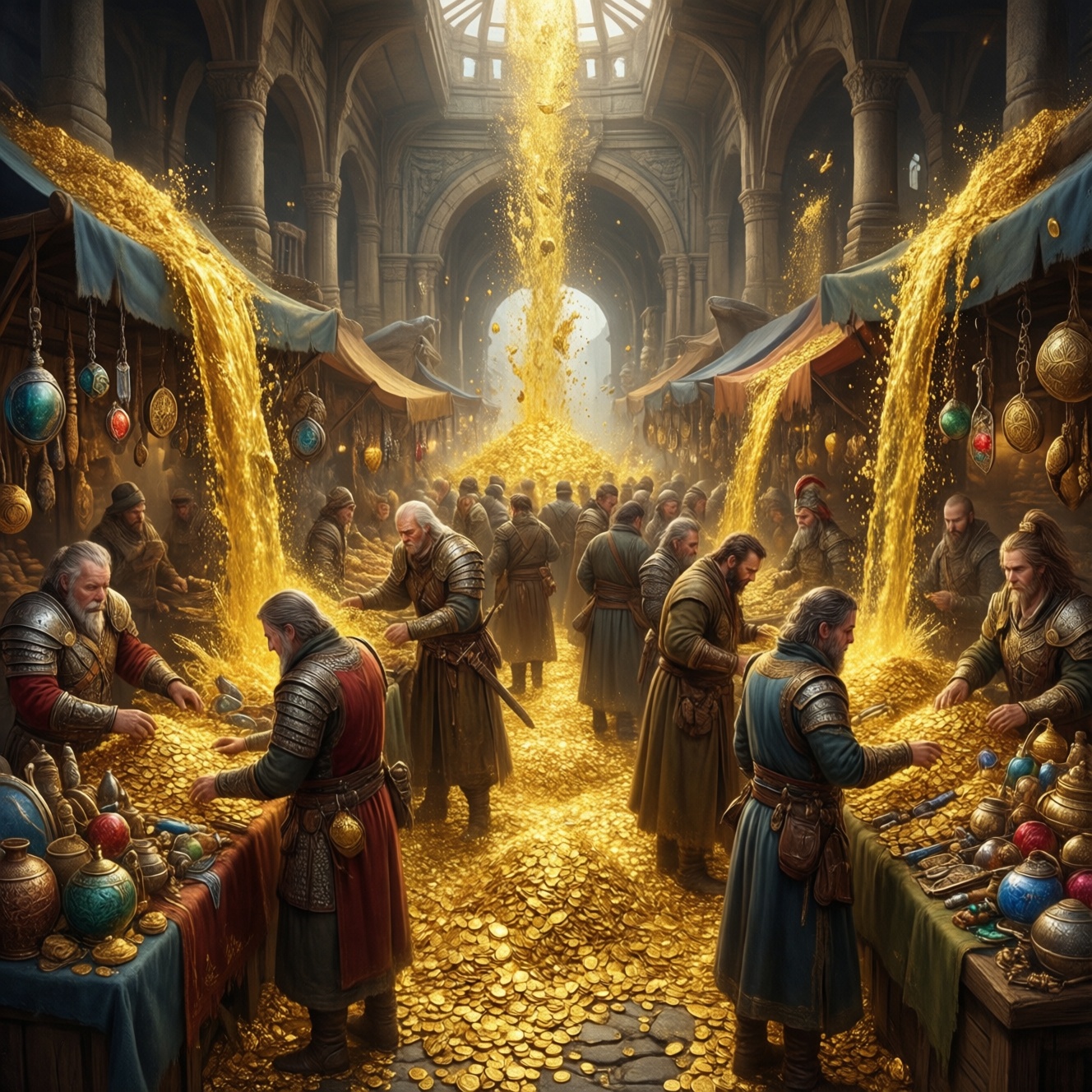
In-game economies aren't casinos by default: they're managed markets where value shifts as currency enters faster than it leaves. In-game economy inflation happens when rewards, drops, and trading increase purchasing power unevenly, raising prices for desirable items. Item sinks counter this by permanently removing currency or goods, stabilizing progression without killing player freedom.
Core Claims at a Glance
- Casino comparisons fail when they ignore player-to-player pricing, crafting loops, and developer-controlled supply.
- Virtual currency inflation in games is usually a content/reward pacing problem, not a purely monetary one.
- Healthy economies require both faucets (earning) and sinks (removal) tied to gameplay goals.
- Sinks work best when they feel optional, fair, and status- or convenience-driven rather than punitive.
- Randomized rewards can resemble gambling mechanics, but economic harm is mainly driven by scarcity design and resale rules.
- Measure inflation with in-world baskets, velocity, and distribution-not just average wealth.
Myths About In-Game Economies: Casino Comparisons Debunked
Myth: "Game economies are just casinos with skins." Reality: Casinos are built around fixed-house odds and cash-out constraints; game economies are usually multi-loop systems where players produce, trade, hoard, and speculate under changing rules and content releases.
Myth: "Inflation is inevitable once players get rich." Reality: inflation is a design outcome: if rewards scale up while sinks and scarcity controls do not, prices drift upward. If sinks scale with activity and high-end demand is diversified, price pressure can be contained.
Myth: "Real-money trading defines the economy." Reality: black/grey markets matter, but core price formation typically comes from in-game utility, time-to-acquire, and patch-driven shifts. The moment players can buy game currency online, your economy also becomes a security and fraud problem, not only a balance problem.
| Claim | Why it sounds like a casino | What to check in your economy |
|---|---|---|
| "House always wins" | Loot odds and monetization feel one-way | Can players trade/convert value, and do patches change supply? |
| "Everything inflates" | Players accumulate currency over time | Are there scalable sinks and reasons to spend at endgame? |
| "RNG equals gambling" | Random rewards mimic chance-based play | Is there pity, caps, transparent odds, and non-RNG acquisition paths? |
How Virtual Inflation Emerges: Supply, Demand, and Player Behavior
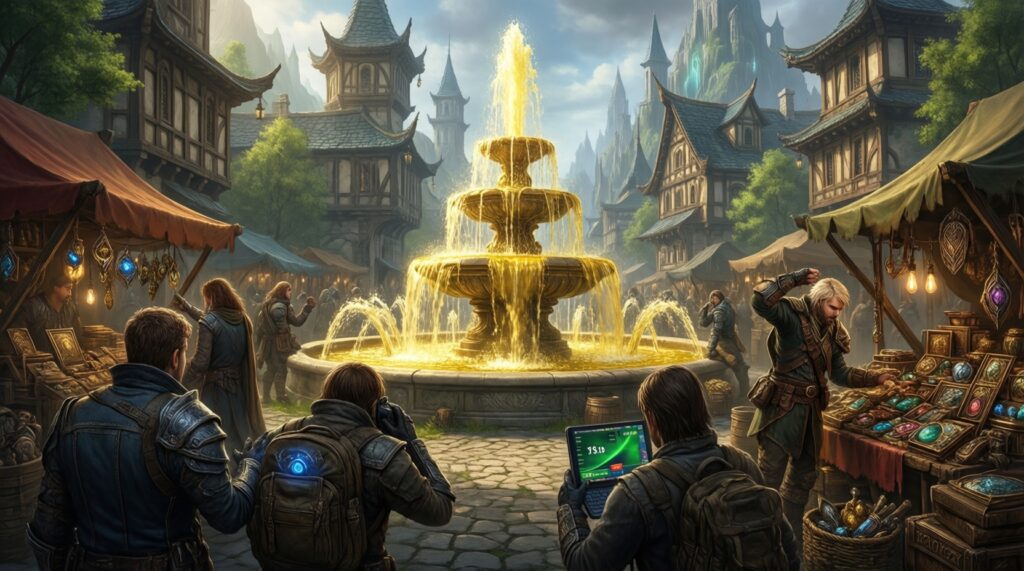
Inflation in virtual worlds is usually driven by a mismatch between how value is created and how it is retired. The most common drivers are behavioral: players optimize loops, concentrate wealth, and treat certain items as stores of value.
- Over-tuned faucets: quest rewards, daily bonuses, event multipliers, and bot-friendly farms inject currency faster than intended.
- Uneven distribution: top earners set market prices; median players experience affordability collapse even if "average wealth" rises.
- Speculation and hoarding: limited-time items become value reservoirs; currency velocity drops, but prices of "safe" goods climb.
- Patch shocks: new best-in-slot gear or recipes spikes demand for a narrow set of materials.
- Resale loops: if crafting/trading returns more value than it destroys, arbitrage becomes an inflation engine.
- External pressure: when MMO gold price trends downward on unofficial markets, more buyers can push in-game prices upward indirectly through demand bursts and laundering behaviors.
Item Sinks and Their Mechanics: Removing Currency Without Breaking Gameplay
In-game item sink systems work when removal feels like progress, identity, or convenience-not a tax for playing. Typical sink scenarios include:
- Repair and durability with meaningful choices: repairs cost currency/materials; higher performance gear costs more to maintain.
- Crafting fees and partial destruction: upgrading consumes ingredients and has non-recoverable components to prevent infinite recycling.
- Cosmetics and personalization: dyeing, transmog, housing decor, guild emblems-high demand, low balance risk, strong removal potential.
- Travel, time-saving, and services: fast travel, storage expansion, marketplace listing fees, name changes, convenience buffs.
- Competitive participation costs: tournament entry, ranked queue tickets, or consumables that matter in PvP/PvE but don't hard-lock content.
- Binding and anti-flip rules: binding on equip/pickup or decay on repeated trades reduces "pure speculation" circulation.
Randomized Rewards as Gambling Analogs: Design, Player Risk, and Ethical Boundaries
RNG reward systems can resemble gambling in the emotional loop (anticipation → reveal → regret/relief). Economically, the danger zone is when randomness creates tradeable scarcity while also pushing repeated spend or grind without clear limits.
Where RNG supports the economy
- Distribution smoothing: broad loot tables can prevent a single farm spot from dominating supply.
- Excitement without resale impact: randomized cosmetics that are non-tradeable reduce market manipulation.
- Progress-backed randomness: shards/tokens from "bad rolls" create predictable long-term acquisition.
Where RNG damages value perception
- Tradeable jackpot items: ultra-rare drops become speculative vehicles, concentrating wealth and pricing out normal players.
- Opaque odds and no ceilings: without caps, pity, or alternative paths, player risk escalates and trust erodes.
- Event-driven scarcity spikes: limited windows plus RNG pushes panic buying and hoarding, amplifying price swings.
Measuring Value: Metrics for Inflation, Scarcity, and Real-World Correlates
Teams often misdiagnose inflation because they watch the wrong dashboard. Avoid these common traps:
- Tracking only total currency: totals can rise even in stable economies; watch distribution (who holds it) and velocity (how often it moves).
- Using a single "flagship" item as a proxy: one prestige item can inflate due to meta changes, not economy-wide drift.
- Ignoring basket pricing: build a "typical player basket" (consumables, mid-tier gear, key materials) to detect broad affordability shifts.
- Confusing scarcity with grind: if an item is scarce because acquisition is tedious rather than strategically limited, bots and no-lifers will set prices.
- Overweighting real-world correlates: unofficial market signals can inform risk, but your primary truth is in-game utility and sinks, not external exchange rates.
Practical Design Interventions to Stabilize Economy and Preserve Engagement
Stabilization works best as a loop: measure → adjust faucets/sinks → validate player experience. In Thailand-focused operations, also consider top-up patterns, fraud pressure, and how quickly social trading communities react to patch notes.
Fast practical tips for economy stability
- Create a sink map: list every mandatory and optional spend, then tag it as early/mid/endgame and cosmetic/power/convenience.
- Scale sinks with activity: attach removal to the actions that generate currency (crafting volume, trading, high-tier farming), not to low-income players.
- Protect new players' purchasing power: keep core progression items insulated from endgame speculation via vendor anchors, bind rules, or alternative acquisition.
- Reduce flip incentives: add listing fees, short trade cooldowns, or diminishing returns on repeated trades of the same item class.
- Instrument "affordability" KPIs: time-to-afford for a basket item set, % of active players completing key purchases, and concentration of top holders.
Mini-case: dynamic sink tuning (pseudo-logic)
Use soft, reversible controls before heavy-handed nerfs. Example logic that increases trade-related sinks when market heat rises:
// Inputs from telemetry (per day/week)
medianBasketCost = priceIndex("midgame_basket")
medianIncome = median(currencyEarnedPerActivePlayer)
tradeVolume = totalMarketTrades
top1Share = shareHeldByTopPercent(1)

// Derived signals (avoid hard numbers; compare to your own baselines)
affordability = medianIncome / medianBasketCost
marketHeat = (tradeVolume is rising fast) OR (top1Share is rising)

// Actions
if (affordability is falling) {
  // protect progression
  increaseVendorSupply("core_materials")
  addNonTradeablePath("core_materials", via="tokens")
}

if (marketHeat) {
  // remove currency where it is created/spent most
  increaseMarketListingFee("high_turnover_categories")
  addLuxurySink("cosmetic_rotation", pricedFor="endgame")
}
Common Developer Concerns Answered
Is inflation always bad for retention?
No-mild price drift can be tolerated if progression remains affordable. It becomes harmful when new and mid-tier players lose access to essential items.
Should we just add a big gold sink to fix everything?
One large sink rarely holds. Prefer multiple sinks that scale with activity and feel like meaningful choices rather than a punishment.
How do we handle players who buy game currency online?
Treat it as both an economy and trust issue: tighten anti-fraud, reduce laundering vectors (easy tradeable stores of value), and design sinks that absorb surplus without breaking progression.
Why does MMO gold price outside the game matter to our internal prices?
External pricing can signal demand shocks and farming pressure. Your best response is still internal: adjust faucets, constrain bot-efficient loops, and add sinks where currency concentrates.
What is the safest category for in-game item sink systems?
Cosmetics, housing, and convenience services are typically safest because they remove currency without directly destabilizing combat power.
Do loot boxes automatically make our economy a casino?
No. The economic risk depends on tradeability, scarcity, transparency, and whether there are non-random paths to the same outcomes.
Which single metric best detects in-game economy inflation?
A basket price index tied to player income is usually the most actionable. It reflects affordability rather than raw wealth totals.