

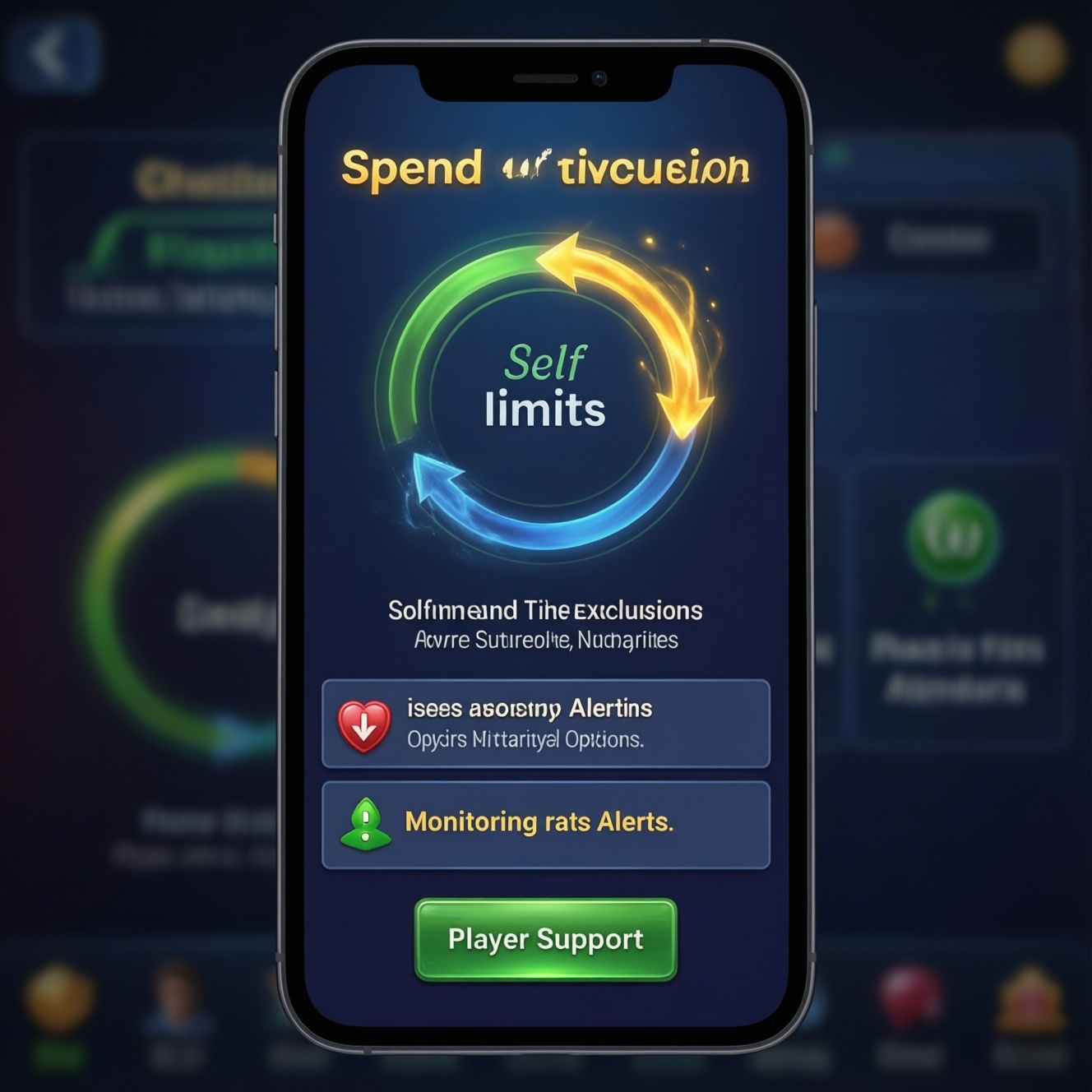
A responsible gaming toolkit is a set of product, policy, and support measures that help players control spend and time, pause or stop play, and access help early-especially in gambling-adjacent games with loot boxes, gacha, or social casino mechanics. Build it around limit-setting, self-exclusion, monitoring signals, clear messaging, and safe escalation paths.
Core Components of a Responsible Gaming Toolkit
- Player controls to set gambling limits on spend, deposits/top-ups, session time, and frequency.
- Account-level lockouts, cooling-off, and casino self exclusion-style blocks across devices and payment routes.
- Behaviour monitoring with early warning flags and proportionate, non-punitive interventions.
- Just-in-time education and safer gambling features embedded in purchase and play flows.
- Clear support pathways: self-help first, then human support, then referral to professional care (Thailand-ready).
- Operator governance: audit logs, role-based access, escalation runbooks, and privacy-by-design.
Setting Practical Betting and Time Limits
Who this fits: teams shipping gambling-adjacent mechanics (randomized rewards, paid pulls, social casino currencies) where players can overspend or lose track of time. It also fits community managers and CX leads who need consistent interventions and documentation.
When not to rely on limits alone: if you see repeated "limit-bumping" requests, chargeback spikes, high-frequency late-night sessions, or players asking how to bypass controls. In those cases, combine limits with cooling-off, stronger friction, and support outreach using responsible gaming tools that are harder to override.
Limit types to implement (minimum viable set)
- Spend limit: daily/weekly/monthly cap on paid currency or top-ups.
- Time limit: session cap with reminders before hard stop.
- Loss/"net spend" proxy: for non-cashout games, use "net paid in" or "paid minus grants" to avoid misleading "loss" language.
- Transaction friction: cooldown between purchases and confirmation prompts above thresholds.
How-to (product + policy)

- Define what you are limiting: map every paid entry point (app stores, web checkout, vouchers, wallet, telco billing) and every in-game sink. Use one canonical "paid value" ledger for limits.
- Choose commitment rules: apply decreases immediately; apply increases only after a delay (cooling period) to reduce impulse changes.
- Make limits discoverable: place controls in Settings, during checkout, and on spend summaries; do not hide them behind support tickets.
- Enforce server-side: client-only limits are bypassable; block at the transaction authorization layer and session service.
Pros and cons (so you can choose deliberately)
- Pros: fast harm-reduction impact, low support load when self-serve, easy to explain to players and regulators.
- Cons: can be gamed if enforcement is partial; may frustrate players if messaging is unclear; requires consistent accounting across platforms.
Designing and Implementing Self‑Exclusion Mechanisms
To implement self-exclusion safely, you need controls that work across devices, authentication states, and payment rails-plus staff processes to prevent accidental reactivation.
What you will need (access, tooling, and governance)
- Identity binding: account ID plus at least one stable identifier (verified email/phone, platform account, or KYC where applicable) to prevent easy re-registration.
- Central blocklist service: an internal API that all game clients and payment services must check before login, play, and purchase.
- State model: cooling-off (short pause), time-boxed self-exclusion (weeks/months), and indefinite exclusion with strict re-entry steps.
- Propagation hooks: logout tokens, session invalidation, and purchase authorization denial.
- Audit and admin controls: immutable logs, role-based access, dual-approval for manual overrides, and reason codes.
- Support scripts: templated responses for players, including crisis language and local Thai support direction when needed.
- Data handling: minimal retention, clear privacy notice, and secure storage (self-exclusion status is sensitive).
Self-exclusion configuration options
- Self-serve in-app: best for speed and accessibility; requires strong identity and server enforcement.
- Assisted via support: best when identity is complex or multiple linked accounts exist; higher staffing cost.
- Network-level blocks: if you operate multiple titles, ensure exclusion applies across the portfolio (not only one game).
Tools for Monitoring Behaviour and Early Warning Signs
-
Define your risk signals and keep them explainable
Start with a small set of observable behaviours tied to your game loop (spend bursts, repeated purchase attempts, long sessions, rapid re-entry after losses or near-misses). Keep every signal interpretable so support teams can act consistently.
- Prefer "what happened" metrics (frequency, time, failed transactions) over inferred mental states.
- Document which signals trigger which interventions.
-
Build a single player-level timeline
Aggregate play, purchase, and limit events into one timeline so you can see sequences (e.g., limit increase request → spending burst → repeated cancel attempts). Use the same ledger that powers limits to avoid mismatches.
- Include: limit set/changed, limit hit, cooldown started/ended, self-exclusion started/ended, support contacts.
-
Create tiered interventions (nudges → friction → lock)
Design escalation steps that match severity: start with reminders, then add friction, then offer cooling-off or self-exclusion. Avoid punitive language; the goal is safer play and player control.
- Nudge: spend/time summary + "take a break" option.
- Friction: confirm dialogs, delayed purchase fulfillment, cooldown between purchases.
- Lock: enforce limit blocks, cooling-off, or exclusion.
-
Operationalize with runbooks and ownership
Assign owners for each alert tier (product, CX, trust & safety). Define response times and what support can and cannot do (e.g., never remove an exclusion early).
- Use templated macros for consistent wording.
- Require case notes and reason codes for any manual action.
-
Measure outcomes without optimizing for more spend
Track whether interventions reduce risky patterns and increase use of controls. Treat "more play" as a disallowed success metric for these features.
- Suggested outcomes: limit adoption, fewer failed purchase attempts, fewer late-night long sessions, increased cooling-off use.
Fast mode: deploy a baseline monitor in one sprint
- Instrument three events: purchase attempt (success/fail), session duration, limit hit.
- Trigger two interventions: spend/time summary nudge, optional cooling-off.
- Enforce one hard rule server-side: block purchases when a limit is hit.
- Give CX one runbook and one "cannot override" rule for exclusions.
Educational Interventions and In‑Game Messaging
Use this checklist to verify your messaging actually helps players make safer choices, rather than just meeting a compliance box.
- Limit-setting is offered at the point of highest risk (checkout/top-up and before high-cost actions).
- Messages use plain language ("You have spent...", "You set a limit...") and avoid moralizing.
- Players can view a simple spend/time summary without digging through menus.
- Cooling-off and self-exclusion are explained with clear duration and what changes in-game.
- Links to help are visible in Thailand context (local language option if available, and time zone-appropriate support hours if you provide them).
- In-game prompts do not create urgency (no countdown pressure) when offering control options.
- "Responsible gambling app" recommendations (if you mention them) are optional, non-affiliate, and not presented as a substitute for professional help.
- Players receive confirmation receipts for limit changes, cooling-off, and exclusions (in-app and/or email).
Sample policy text you can reuse
- Limit increases: "If you raise a limit, the change takes effect after a cooling period. Decreases take effect immediately."
- Self-exclusion: "When self-exclusion is active, you cannot play or make purchases. We cannot remove self-exclusion early."
Support Pathways: From Brief Help to Professional Treatment
- Hiding help behind a ticket: if the only way to pause play is contacting support, many players will not use it.
- Letting agents override exclusions: removing blocks "as a courtesy" is unsafe and undermines trust.
- Over-promising confidentiality: be clear about what is logged and when you may need to act for safety.
- Using shame-based copy: it reduces disclosure and increases avoidance.
- Conflating refunds with harm support: separate financial disputes from wellbeing conversations; route appropriately.
- No escalation for distress: have a script for self-harm ideation or acute distress, including when to recommend urgent local services.
- One-size-fits-all messaging: tailor by risk tier; repeated high-risk signals should prompt stronger options (cooling-off/exclusion).
- Not closing the loop: after an intervention, ensure the player can see what changed (limits, locks, next eligible date).
Minimal pathway you can implement now
- Self-serve: limits, cooling-off, self-exclusion in-app.
- Assisted support: trained CX with a decision tree and templated messages.
- Referral: provide a short list of professional options and encourage contacting qualified providers when control tools are not enough.
Regulatory Compliance and Operator Best Practices
When full gambling-style controls are not feasible, use these alternatives in the scenarios where they fit best.
- Platform-level spend controls: appropriate when purchases occur entirely via app stores and you cannot reliably enforce server-side caps; still add in-game reminders and friction.
- Age-gating and verified accounts: appropriate when you need stronger identity binding for effective exclusion and to reduce multi-account bypassing.
- Title-wide "safe mode" presets: appropriate for new players; default-on reminders, lower default caps, and reduced purchase prompts until the player opts into higher intensity.
- External blocking guidance: appropriate as a supplementary measure-offer instructions for device/app blockers, but do not present them as your primary safeguard.
Common Practitioner Concerns and Solutions
How do we add responsible gaming tools without harming retention?
Make them self-serve, predictable, and non-punitive; players who want control will use them. Avoid surprise hard stops by giving clear warnings and receipts.
What is the safest default when players want to increase limits?
Apply increases only after a delay and apply decreases immediately. Keep the rule consistent across platforms and make it visible in the UI.
How should casino self exclusion translate to gambling-adjacent games?
Block login/play and purchases across all linked titles and payment routes, not just one game mode. Do not allow early reversal; re-entry should be deliberate and documented.
Can we recommend a responsible gambling app as a solution?
You can suggest it as an optional supplement (reminders, spending diary), but it must not replace in-product controls or professional support when risk is high.
What are the first safer gambling features to ship if we have limited engineering time?
Server-side purchase blocks when limits are hit, a simple spend summary, and one-click cooling-off. These provide immediate risk reduction and clear player control.
How do we detect risky behaviour without profiling or overreaching?
Use explainable, event-based signals (frequency, duration, repeated failed purchases) and tie each to a proportionate action. Avoid inferring mental health states; focus on observable patterns.