


Virtual items become valuable when players believe they reliably deliver utility, status, or access-and when the game's supply is constrained in believable ways. In any in-game economy, value emerges from controlled issuance, strong demand loops, and scarcity that feels fair. Virtual item pricing is therefore a design outcome, not a fixed property of the item itself.
Core Concepts at a Glance
- Virtual items value comes from perceived usefulness, not from file size, graphics quality, or rarity labels alone.
- Every in-game economy is a policy system: drop rates, sinks, trading rules, and enforcement define the market.
- Supply constraints must be credible: players test limits, farm routes, and exploit edges.
- Demand is usually driven by progression speed, competitive advantage, identity/status, convenience, and social proof.
- Scarcity can be engineered (artificial), emergent (natural), or scheduled (time-limited), each with different trust tradeoffs.
- Good pricing decisions use signals: liquidity, time-to-earn, replacement cost, and elasticity-not hype alone.
Common Myths About What Makes Virtual Items Valuable
Myth: "Rarity automatically creates value." In practice, a rare drop that nobody needs is just scarce clutter. A common item that is consumed constantly (crafting mats, ammo, reroll tokens) can hold stronger and steadier value because demand is continuous.
Myth: "A higher price proves quality." Many games let players buy game virtual items directly; that price is often a monetization decision (anchoring, bundles, limited offers), not a market-clearing price. Players still evaluate whether the item saves meaningful time, improves win probability, or signals status.
Myth: "Player trading always makes prices fair." A game item marketplace can amplify manipulation, hoarding, and misinformation if supply is opaque or enforcement is weak. Market fairness depends on rules (fees, anti-bot measures, listing limits) and transparency (history, volume, drop sources).
Working definition: A virtual item is valuable when players can repeatedly convert it into outcomes they care about (power, time saved, prestige, access), under constraints that prevent effortless replication.
How Supply Is Created and Controlled in Games
Supply is not "how many items exist," but how fast items enter circulation and how easily they can be duplicated, traded, or retained. Designers effectively act like a central bank and customs authority at the same time.
- Issuance rules: drop rates, crafting yields, quest rewards, gacha pools, shop restocks.
- Gates: stamina/energy, weekly caps, rank requirements, content locks, event participation thresholds.
- Friction: bind-on-pickup, bind-on-equip, trade cooldowns, listing limits, escrow/verification steps.
- Sinks: repair costs, consumable usage, upgrades that consume items, rerolls, fusing, taxes/fees.
- Duplication resistance: server authority, anti-cheat, rollback tooling, inventory integrity checks.
- Supply visibility: public drop tables and price history reduce rumors; opacity increases speculation.
Simple supply sanity metric: Net Creation Rate = items minted per day − items destroyed per day. If it stays positive for too long without matching demand growth, inflation is the default outcome.
Demand Drivers: Player Motivation and Utility
Demand is created by what players are trying to achieve. The same item can have different value across cohorts (new players vs veterans, PvE vs PvP, collectors vs optimizers). Typical demand scenarios:
- Progression acceleration: an XP booster or crafting catalyst that reduces grind time for players racing to endgame.
- Competitive edge: consumables that improve win rate in ranked modes (even a small edge drives repeat demand).
- Build flexibility: respec tokens or reroll currency valued by theorycrafters who iterate often.
- Access and convenience: keys, passes, teleport items, inventory space-high value when time is the bottleneck.
- Social signaling: cosmetics tied to prestige achievements or limited runs; demand spikes around social moments (streams, seasons).
- Portfolio/speculation: traders accumulating items they expect to rise in a game item marketplace after a patch or event.
Practical demand metric: Time Saved Value ≈ (minutes saved per use) × (player's grind minutes per session). If the item barely changes outcomes, demand is fragile even if the item looks impressive.
Types of Scarcity: Artificial, Natural, and Time-Limited
Scarcity is a story players can verify. If the scarcity mechanism is easy to bypass, players treat it as marketing, not economics.
| Scarcity type | How it's created | Best for | Main risk |
|---|---|---|---|
| Artificial scarcity | Caps, bind rules, limited minting, high crafting costs | Stable progression pacing, controlled inflation | Feels arbitrary if not justified by gameplay |
| Natural scarcity | Difficulty, skill gates, time investment, coordination requirements | Prestige items, mastery rewards | Boosting services and bot farms can hollow it out |
| Time-limited scarcity | Seasonal drops, events, rotating shops | Live ops excitement, comeback moments | FOMO backlash; distrust if "limited" returns too often |
Advantages you can design for
- Predictable economy management: caps and sinks keep Net Creation Rate controllable.
- Motivation loops: timed scarcity creates participation spikes and social coordination.
- Meaningful prestige: natural scarcity rewards skill and commitment in a way players respect.
Limitations you must accept
- Players arbitrage rules: if trading is allowed, scarcity shifts to whatever is easiest to hoard or manipulate.
- Unequal impact: scarcity often hits late joiners and casuals harder, affecting retention.
- Patch sensitivity: balance updates can instantly change usefulness, collapsing perceived scarcity into irrelevance.
Methods for Valuing Items: Metrics, Models, and Signals
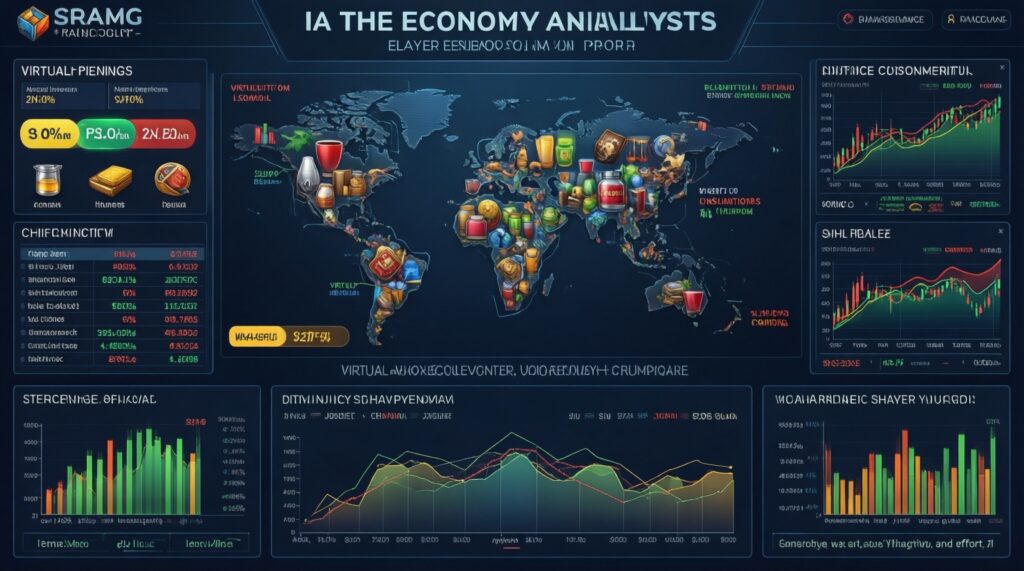
Valuation is about estimating what an item reliably converts into. In practice, teams combine player behavior signals with simple models-then sanity-check against how players can earn, trade, and consume the item.
- Replacement cost (earn-model): value ≈ time-to-earn × (perceived grind pain). Common mistake: ignoring bots/optimized farms that cut time-to-earn drastically.
- Utility per unit: value ≈ (expected outcome gain) ÷ (uses consumed). Mistake: measuring average gain when value is driven by top-tier competitive players.
- Liquidity signal: in a trading economy, higher completed-trade frequency usually beats high listing prices. Mistake: reading value from the highest posted price rather than executed trades.
- Elasticity check: if a 10% price increase halves purchase volume, you are pricing a convenience good like a luxury. Mistake: assuming cosmetics and power items behave the same.
- Patch-risk discount: items vulnerable to nerfs should carry a risk haircut. Mistake: setting permanent prices for items whose utility is seasonal.
Operational note for virtual item pricing: when you sell directly and also allow trading, you're effectively setting a floor/anchor that can distort the player-driven price discovery.
Market Risks and Design: Exploits, Inflation, and Governance
Mini-case: A new dungeon starts dropping "Ember Shards," used to reroll endgame gear. Designers want shards to be valuable, so they add them to a timed event and allow trading. Within days, bot parties farm shards 24/7, flooding the market, collapsing prices, and making rerolls effectively free-gear power inflates and PvP balance breaks.
A practical governance pattern is to watch Net Creation Rate and liquidity, then adjust sinks before adjusting drop rates (drop-rate changes feel punitive). Simple control logic:
if net_creation_rate > target and median_price is falling fast:
    increase sink (reroll cost, crafting tax) slightly
    add soft cap (diminishing returns after N runs/day)
    strengthen anti-bot checks on the top farming route
elif net_creation_rate < target and liquidity is drying up:
    add alternative sources (quests, pity timer) without removing sinks
In real-world terms, this is closer to managing money supply and transaction fees than to "making a rare item." The goal is a market where effort, skill, and spending all remain meaningful options without one dominating.
Practical Questions Players and Designers Ask
Why do two games with similar cosmetics have very different prices?
Because the surrounding in-game economy differs: earning speed, sinks, trade rules, and social meaning change willingness to pay more than art quality alone.
Is a player-run marketplace always better than a fixed shop?
No. A game item marketplace improves price discovery but increases manipulation and bot incentives unless governance and enforcement are strong.
What makes players willing to buy virtual items without power advantages?
Status signaling, identity expression, and convenience are enough when scarcity is credible and the item is visible in social contexts.
How can I estimate a fair price if players can also earn the item?
Start with replacement cost: compare price to time-to-earn and the item's consumption rate, then validate using executed trade volume rather than listings.
Do limited-time items always increase value?
Only if "limited" is trusted and the item remains useful or prestigious after the event. Repeated reruns can reduce perceived scarcity.
Why does value collapse after a patch even when supply didn't change?
Demand shifted: if utility drops (nerf, meta change, new alternative), the same supply now chases fewer buyers, pushing prices down.
What should I check before I buy game virtual items from a shop?
Check whether the item is consumable or permanent, how it interacts with future balance patches, and whether trading or earning routes can quickly devalue it.