


CS2 skin betting is only rational when you translate cs2 betting odds into implied probability, then price your wager using the skin's real market value adjusted for cs2 skin wear value and cs2 skin float value. This guide shows how to compute expected value, size bets safely, and avoid common mispricings seen on many cs2 skin betting sites.
Essential Considerations Before Betting Skins
- Convert odds to implied probability before staking any skin.
- Value the exact item you will stake (same skin, same wear tier, similar float), not a "median listing."
- Account for fees, withdrawal friction, and liquidity; EV can flip negative after costs.
- Use strict stake sizing because skin prices can gap quickly during hype or patch-driven demand shifts.
- Prefer markets where settlement is transparent and you can verify item details pre-bet.
How Match Odds Translate to Skin Value
This approach fits intermediate users who already understand decimal odds and basic skin pricing, and want to make cs2 skin betting decisions based on math rather than "team feel." It is most useful when you can reliably price your skin and when the odds have not fully adjusted to public sentiment.
Skip skin wagers when any of the following is true:
- You can't verify the exact item details being staked/returned (wear tier, float, special patterns, stickers).
- Liquidity is poor (few real buyers at your target price), making "paper value" misleading.
- The site forces conversion to an internal balance with unclear fees or non-instant withdrawals.
- The odds are heavily juiced and you cannot estimate the effective fee/takeout.
Interpreting Float and Wear: Their Direct Effect on Price
To price a wager correctly, you need tooling and access that let you verify float, wear tier, and comparable sales/active listings. Prepare the following before using cs2 betting odds to decide a stake:
- Inventory inspection access for the exact item (inspect link or equivalent view).
- A way to read float reliably (in-game inspect or trusted float-check tooling).
- Recent comparable listings/sales references for the same skin and wear tier.
- Notes on special value drivers: rare patterns, stickers (and whether they add real liquidity), souvenir status.
| Wear tier (typical float band) | Market pricing behavior (no hard numbers) | Bet implication |
|---|---|---|
| Factory New (very low float) | Often commands a premium; low-float "clean" examples can be meaningfully more liquid than borderline FN. | Only stake if you can recover the premium on resale; avoid treating it like the average FN listing. |
| Minimal Wear (low to mid float) | Prices can vary within tier; near-FN floats may sell faster than near-FT floats. | Good for wagering if you anchor valuation to comparable floats, not tier label alone. |
| Field-Tested (mid float) | Typically highest liquidity; narrower float-driven premium unless the skin is highly finish-sensitive. | Best default stake tier for controlled risk and easier exit pricing. |
| Well-Worn (high float) | Discounted vs. FT; can be less liquid depending on the skin's look at high wear. | Stake only if you're comfortable accepting a larger resale spread. |
| Battle-Scarred (very high float) | Often the steepest discount and widest spreads; niche buyers for certain finishes. | Avoid as stake unless you explicitly model a larger haircut and slower liquidation. |
Estimating Expected Value (EV) for Skin Wagers
Risks and limitations to keep in mind before you run the numbers:
- Skin prices can move between bet placement and liquidation; EV based on stale comps is unreliable.
- Float-based premiums are not uniform across finishes; some skins barely react to float inside a tier.
- Fees (site rake, trade fees, withdrawal friction) can dominate small "edges."
- Low liquidity turns theoretical value into realized losses via spreads and undercutting.
-
Normalize odds into implied probability
For decimal odds O, implied probability is p = 1 / O. For example, odds 2.20 imply p ≈ 0.455 before any margin.
-
Estimate true win probability (your edge)
Create your own probability p* using a consistent method (ratings, map pool, roster changes, scheduling). If you cannot justify p*, assume p* = p and do not bet.
- Be conservative: uncertainty should push p* toward the market probability.
- Adjust for last-minute changes (stand-ins, veto tendencies) only when verifiable.
-
Value the exact skin at a realistic liquidation price
Start from recent comparables for the same item and wear, then apply a conservative haircut for spread and speed-to-sell. Your pricing must reflect the exact cs2 skin wear value tier and the item's cs2 skin float value relative to typical floats in that tier.
- If float is better than average for the tier, assume only a premium you can actually realize quickly.
- If float is borderline (e.g., "almost the next worse tier"), assume a discount and slower liquidity.
-
Incorporate all costs into a net payout model
Let S be your skin's liquidation value, and let c be total costs as a fraction (fees, friction, slippage you expect). Net value if you win is W = S × (1 − c); if you lose, your result is −S.
-
Compute EV and require a buffer
Use EV = p* × W − (1 − p*) × S. Only proceed if EV is clearly positive after costs and uncertainty; in practice, require a buffer so small estimation errors don't wipe out the edge.
- Worked example (structure): if your conservative p* is higher than 1/O and costs are low, EV may be positive; if costs/spreads are high, EV often turns negative even with a small edge.
-
Decide stake size and exposure cap before placing the bet
Set a maximum stake fraction of bankroll and a daily/weekly loss limit. This keeps one bad swing from forcing you to dump skins into illiquid markets.
Bankroll Rules for Volatile Skin Markets
- I can liquidate this exact skin (same wear and similar float) within my expected time window without panic-underpricing.
- I used implied probability (p = 1/O) and wrote down my own p* with a reason.
- My valuation is based on conservative comps, not the highest listing or a "suggested" site price.
- I included a spread/fee/friction allowance and EV stays positive after those costs.
- This stake is within my per-bet cap and does not exceed my daily loss limit.
- I am not staking rare-pattern/sticker-heavy items unless I can price their premium and exit liquidity.
- I am not chasing losses by escalating to higher-value skins.
- I have a plan if withdrawals are delayed (no forced "rebets" due to lockups).
Timing Trades: Using Float and Wear to Find Edges
- Pricing by wear label only and ignoring float dispersion within the tier.
- Assuming low-float premiums are always realizable; many buyers won't pay extra unless the finish is float-sensitive.
- Valuing your stake at "best listing" instead of a quick-sale liquidation price.
- Overpaying for borderline tiers (e.g., high-float MW priced like clean MW).
- Ignoring liquidity: niche items can trap value even if the nominal price looks strong.
- Betting immediately after major news (roster moves, patches) when comps lag and spreads widen.
- Using internal site prices as market truth on cs2 skin betting sites instead of external comparables.
- Letting a "good float" justify a bet with negative EV from odds and fees.
Risk Mitigation: Detecting Scams, Manipulation, and Mispricings
When the risk profile is too high, use alternatives that preserve value and reduce counterparty exposure:
- Switch to cash/fiat wagering (if available and legal in your context) - reduces float/wear valuation errors and liquidity risk, especially when your inventory is thin or illiquid.
- Use low-volatility, high-liquidity skins only - favor widely traded Field-Tested items to narrow spreads and make your EV assumptions more reliable.
- Skip the bet and take a pricing trade instead - if you spotted a mispriced float within a tier, a direct buy/sell can be cleaner than tying value to match variance.
- Reduce exposure via smaller stakes and hard stop-loss rules - if you still want action, cap stake size and enforce cooldown periods after losses to avoid tilt-driven overbetting.
Concise Clarifications on Odds, Float, and Risk
How do I convert cs2 betting odds into implied probability?
For decimal odds O, implied probability is p = 1 / O. This is a baseline and does not guarantee fair pricing if the market includes margin.
Why does cs2 skin float value matter if the wear tier is the same?
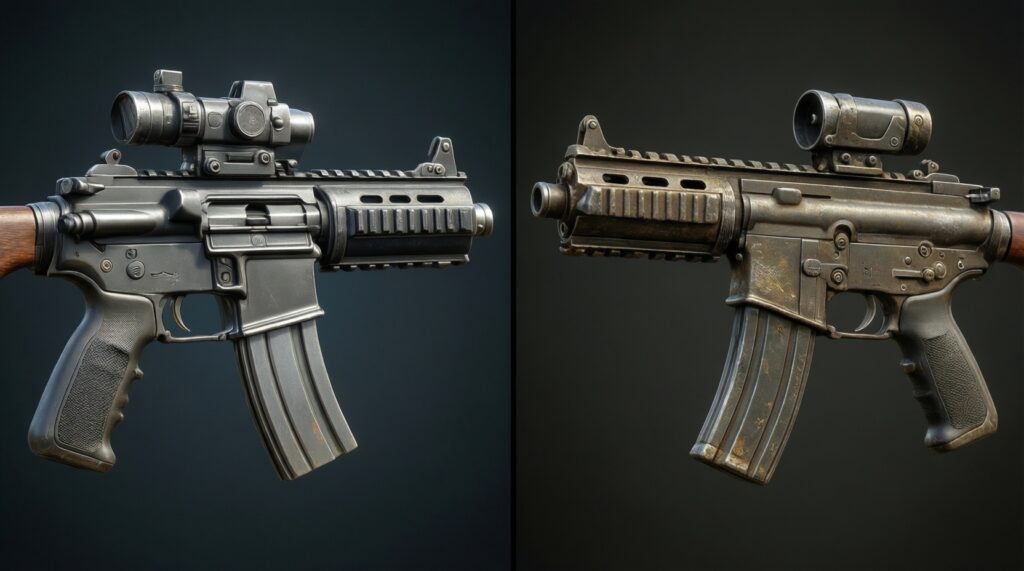
Float changes how the skin looks and how collectors price it within a tier. Two "Minimal Wear" items can have very different liquidity and resale spreads due to float.
Is cs2 skin wear value enough for pricing a stake?
No-wear tier is a coarse bucket. You still need float, finish sensitivity, and liquidation comps to avoid overvaluing borderline items.
What's the simplest EV check for cs2 skin betting?

Estimate p*, compute p = 1/O, and only bet when p* is meaningfully higher after accounting for fees and resale spread. If you can't defend p*, pass.
How do fees on cs2 skin betting sites change EV?
Fees reduce the effective payout and increase the required edge. Model them as a cost fraction on your win-side value and re-check EV.
Which wear tier is safest for wagering?
Typically, the most liquid tier for a given skin is safer because spreads are tighter and liquidation is faster. Many users default to Field-Tested for this reason, but always verify liquidity for the specific item.
When should I avoid betting skins entirely?
Avoid it when withdrawals are uncertain, item details can't be verified, or you're forced to accept internal pricing. Also avoid betting during periods when comps are stale and spreads widen.